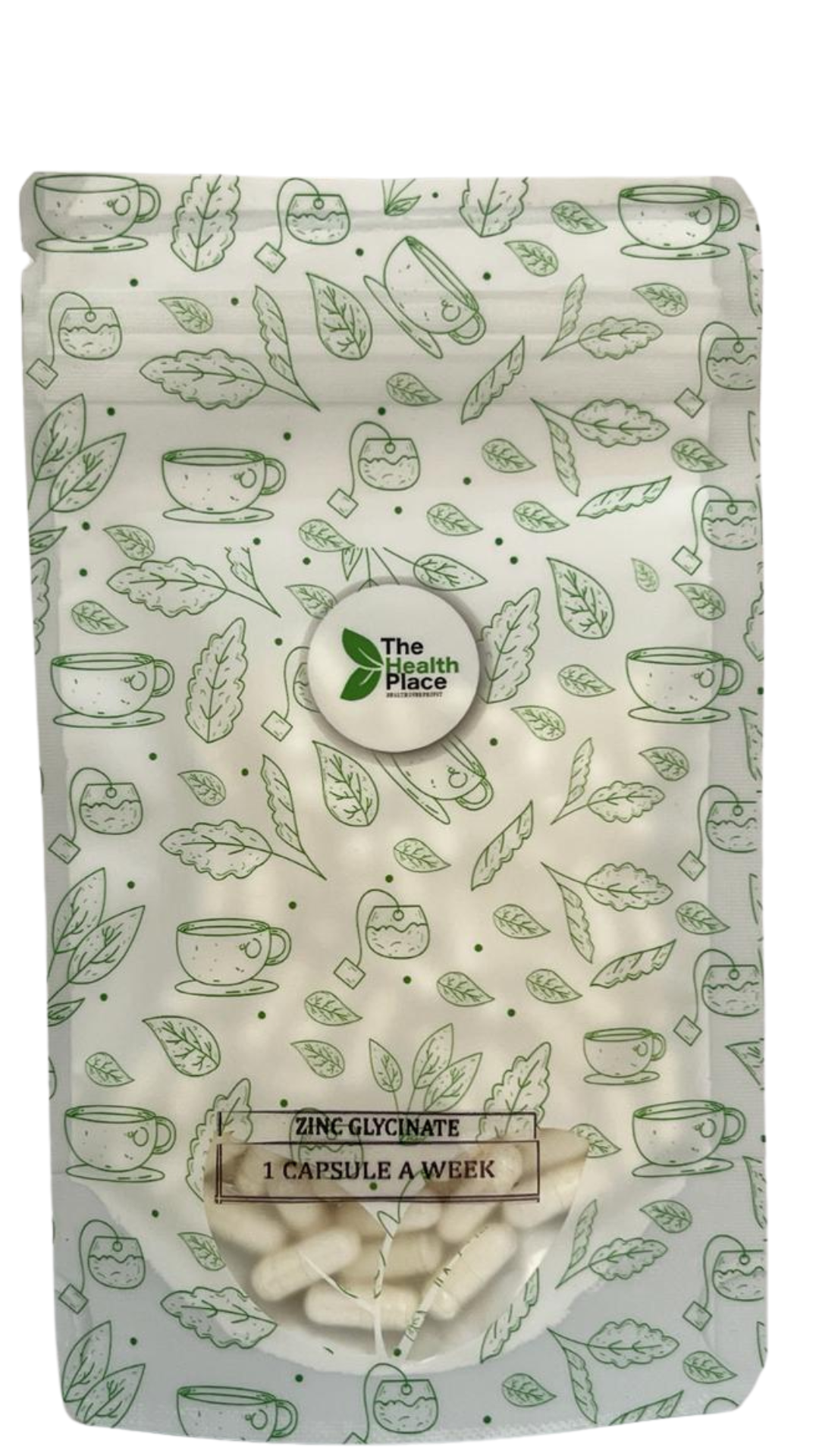
Zinc Bisglycinate- 100 Capsules 240mg each
Scientific Name: Zinc Bisglycinate
Origin: USA
Size: 100 Capsules
Compound Weight: 240mg per capsule
Elemental Zinc: Approximately 48mg per capsule
THP Zinc Bisglycinate is a chelated form of zinc in which zinc is bound to the amino acid glycine.
Zinc is an essential trace mineral required for normal immune function, wound healing, DNA and protein synthesis, skin health and reproductive function. Zinc deficiency can also contribute to hair loss and impaired taste and smell.
Zinc Bisglycinate is particularly useful for people looking for nutritional support for zinc deficiency, immunity, acne and skin wellness, hair health where low zinc is a factor, and reproductive wellness.
Each capsule contains 240mg Zinc Bisglycinate compound, providing approximately 48mg elemental zinc.
Because this is a relatively high-potency zinc supplement, more is not better. Follow the THP directions rather than assuming it should be taken every day.
FREQUENTLY ASKED QUESTIONS
What is Zinc Bisglycinate?
Zinc Bisglycinate is zinc bound to the amino acid glycine.It is a chelated form of zinc used to provide the body with the essential mineral zinc.
What is Zinc Bisglycinate used for?
THP Zinc Bisglycinate is particularly relevant for:
1. Immune support
Zinc is required for normal immune function. If your priority is supporting adequate zinc intake and normal immune-system function, this is an appropriate zinc supplement.
2. Acne and skin wellness
Zinc plays important roles in normal skin function and wound healing.For someone dealing with acne, zinc can be particularly relevant when dietary zinc intake is inadequate or zinc deficiency exists. It is supportive nutritional care rather than an acne medication.
3. Hair loss where zinc deficiency may be involved
Zinc deficiency can cause hair loss. If inadequate zinc is contributing to hair shedding, correcting zinc status may therefore be useful.
However, zinc will not correct hair loss caused by completely unrelated factors such as androgenetic alopecia, thyroid disease, iron deficiency or certain hormonal changes.
4. Male fertility and reproductive wellness
Zinc is important to male reproductive physiology and normal testosterone metabolism.For men whose zinc intake or zinc status is inadequate, correcting that deficiency is particularly relevant.
We would not market zinc as a general testosterone booster in men who already have adequate zinc status.
Can Zinc Bisglycinate help with acne?
Zinc has biological roles relevant to normal skin function, immune response and wound healing.
Some clinical research has investigated zinc supplementation for acne, but it should be considered supportive rather than a replacement for appropriate acne treatment, particularly for moderate or severe acne.
Can Zinc Bisglycinate help with PCOS?
Zinc has been studied in women with PCOS, including in relation to metabolic and androgen-related parameters.
Can Zinc Bisglycinate help with insulin resistance?
Zinc is involved in normal glucose metabolism, and zinc supplementation has been studied in metabolic health.
For women with PCOS + insulin resistance, supplement with zinc and , Myo-Inositol or Myo + D-Chiro-Inositol.
Does Zinc support the immune system?
Yes. Zinc is required for normal immune-system function. Zinc deficiency can impair immune function, which is one reason adequate zinc intake is important.
Does Zinc help wounds heal?
Zinc is required for normal wound healing. Zinc deficiency can delay wound healing. A persistent, infected or poorly healing wound needs appropriate medical assessment rather than simply increasing zinc supplementation.
Can Zinc help with hair loss?
It can be relevant when zinc deficiency is contributing to the hair loss. Zinc deficiency is a recognized cause of hair loss. That does not mean all hair loss requires zinc. Iron status, thyroid function, hormones, genetics, stress, nutrition and other factors can also contribute.
Why is Zinc recommended for men trying to conceive?
Zinc is an important mineral for male reproductive health, sperm production and normal sperm function.Zinc is naturally present at high concentrations in seminal fluid and plays roles in sperm development, motility, membrane stability and the stability of sperm chromatin the tightly packaged DNA carried by sperm.
Research has also found lower seminal zinc concentrations in infertile men compared with fertile men, while some studies of zinc supplementation in infertile men have reported improvements in sperm motility, semen volume and normal sperm morphology.
For this reason, Zinc Bisglycinate can be considered as part of a nutritional routine for men trying to conceive, particularly where zinc intake or zinc status may be inadequate.
It is important, however, to distinguish supporting sperm and semen health from guaranteeing fertility. Male fertility has many possible causes, and zinc supplementation has not been shown to guarantee pregnancy or live birth.
Does Zinc help sperm DNA?
There is a genuine biological connection.Zinc participates in the stabilisation of sperm chromatin, which is the highly condensed structure containing the sperm’s DNA. Zinc also contributes to antioxidant defence, which is relevant because excessive oxidative stress can damage sperm DNA.
Can Zinc improve sperm motility?
Possibly, particularly in men with inadequate zinc status or infertility. A systematic review and meta-analysis found that zinc supplementation significantly improved sperm motility in infertile men. However, results across individual studies have not been completely consistent, so zinc should be considered nutritional support rather than a treatment for poor sperm motility.
Can women take Zinc Bisglycinate?
Yes. Zinc is an essential nutrient for both women and men. Women may use zinc for normal immune function, skin health, nutritional adequacy and reproductive wellness.
Your capsule says 240mg Zinc Bisglycinate. Isn’t that far above the recommended daily amount of Zinc?
No. 240mg of Zinc Bisglycinate does NOT mean 240mg of Zinc. This is an important distinction when reading mineral supplement labels.
Our capsule contains: 240mg Zinc Bisglycinate compound but provides approximately 48mg Elemental Zinc
Think of Zinc Bisglycinate as the complete compound. It consists of zinc bound to glycine. The 240mg refers to the weight of the entire compound both the zinc and the bisglycinate portion.
Elemental Zinc refers specifically to the amount of actual zinc contained within that compound.
So you should not compare 240mg directly with the RDA for Zinc. The number that should be compared with dietary recommendations is the approximately 48mg of elemental zinc, not the 240mg compound weight.
What is the Recommended Dosage Allowance (RDA)for Zinc
The recommended dietary allowance for adults is approximately 11mg of Zinc per day for men and 8mg per day for women. These figures refer to elemental zinc, the actual mineral not the total weight of a zinc compound such as Zinc Bisglycinate.
THP Zinc Bisglycinate contains 240mg of Zinc Bisglycinate compound, providing approximately 48mg of elemental zinc per capsule.
Because this is a high-potency Zinc supplement, our recommended routine is one capsule once a week, unless you have a diagnosed Zinc deficiency or have been advised to use it differently by a healthcare professional.
Why is Zinc attached to Bisglycinate in the first place?
Pure elemental zinc isn’t simply put into a supplement capsule by itself. Supplemental zinc is supplied as a zinc compound for example, Zinc Bisglycinate, Zinc Citrate, Zinc Gluconate or Zinc Picolinate.
With Zinc Bisglycinate, the zinc is chelated, or bound, to glycine Consequently, when you see the weight of a mineral compound on a supplement, you need to ask:
“How much elemental mineral does this actually provide?” That same principle applies to minerals such as Magnesium. A capsule can contain hundreds of milligrams of Magnesium Bisglycinate without providing hundreds of milligrams of elemental magnesium.
Should I take THP Zinc Bisglycinate every day?
No. Our Zinc Bisglycinate is a high-potency Zinc supplement and is not intended for routine daily use.
Each capsule contains 240mg Zinc Bisglycinate compound, providing approximately 48mg of elemental Zinc.
This product is specifically formulated for people who are Zinc deficient or who are using Zinc to address health concerns associated with Zinc deficiency.
If you are not Zinc deficient but choose to include this high-potency Zinc in your general wellness routine, take only one capsule once a week.
If you have a diagnosed Zinc deficiency, you may require a different frequency or duration of supplementation. Follow the guidance of your healthcare professional.
Why shouldn’t I take too much Zinc?
THP Zinc Bisglycinate is high potency, so more is not better. Regularly consuming excessive amounts of Zinc can interfere with Copper absorption and, over time, contribute to Copper deficiency. Excessive Zinc can also cause nausea and other gastrointestinal symptoms.
This is why THP recommends one capsule once a week for people who are not Zinc deficient.
If you are taking this product specifically to correct a Zinc deficiency or a health concern associated with Zinc deficiency, your dosage and duration should be determined according to your individual needs and appropriate healthcare guidance.
Should I take Zinc and Copper together?
Not automatically. Long-term high zinc intake can reduce copper absorption, but that doesn’t mean everyone taking zinc should independently add a copper supplement.
If you are using higher-dose zinc regularly or long-term, discuss your total zinc and copper intake with an appropriately qualified healthcare professional.
Can I take Zinc with Magnesium?
Yes, both nutrients can form part of the same supplement routine. The important issue is your total intake and whether either supplement needs to be separated from medication.
Can I take Zinc with Vitamin C?
Yes. Zinc and Vitamin C can generally be included in the same nutritional routine.
Can I take Zinc with Iron?
They can both be needed, but higher supplemental amounts of minerals can compete for absorption.
If you are taking therapeutic iron because of diagnosed iron deficiency or anaemia, follow the timing instructions given for your iron rather than taking every mineral supplement together.
Should I take Zinc with food?
For many people, yes. Zinc supplements can cause nausea or stomach discomfort, particularly when taken on an empty stomach. Taking it with food may improve tolerance.
Can Zinc make me nauseous?
Yes. Nausea and gastrointestinal discomfort can occur with supplemental zinc, particularly at higher amounts.
Because this THP formulation provides approximately 48mg elemental zinc per capsule, taking it with food may be more comfortable.
Can I take Zinc during pregnancy or breastfeeding?
Zinc is an essential nutrient during pregnancy and breastfeeding, but this particular product is high potency.
Do not automatically add it to a prenatal supplement, because prenatal products commonly already contain zinc. Your total intake needs to be considered.
Can children take this Zinc Bisglycinate?
This particular 48mg elemental-zinc formulation should not be treated as a routine children’s zinc supplement.
How many capsules are in the pack?
100 capsules.
Each capsule contains 240mg Zinc Bisglycinate compound, providing approximately 48mg elemental zinc.
Where can I buy Zinc Bisglycinate in Nigeria?
THP Zinc Bisglycinate is available online from The Health Place Africa for delivery within Nigeria.
For help deciding whether Zinc Bisglycinate is appropriate for your wellness routine, WhatsApp us during consultation hours Monday–Thursday: 11am–4pm Friday: 11am–3pm
Premium Quality
No fillers, flow agents, or preservatives
• Imported 100% raw from trusted sources ✔
• Carefully Packed in Nigeria ✔
• ISO 22000:2018 Certified ✔
• SGS cGMP (21 CFR Part 111) Certified ✔
• Halal & Kosher Certified ✔
• Non-GMO ✔
All our products are 100% natural, produced under globally recognized certifications, and processed in FDA-registered, GMP-certified facilities.
Statements regarding dietary supplements have not been evaluated by the FDA and are not intended to diagnose, treat, cure, or prevent any disease or health condition.

Choose options