
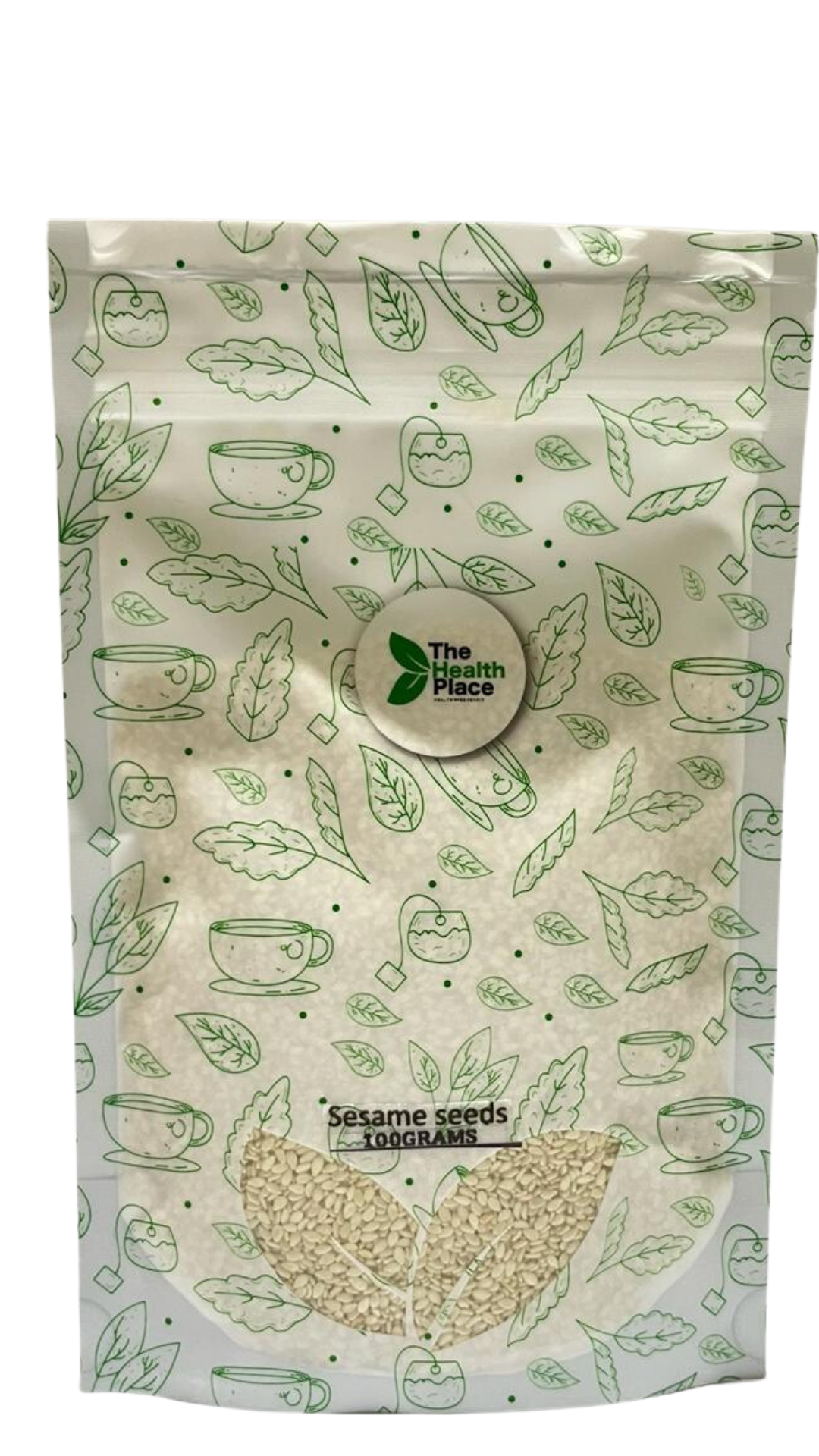
White Sesame Seeds- 100 Grams
Botanical Name: Sesamum indicum
Origin: USA
Sesame Seeds
Small seeds. Everyday nourishment.
THP Sesame Seeds are a naturally nutritious addition to your daily meals, providing plant-based protein, dietary fiber, healthy unsaturated fats, and essential minerals.
Their delicate, nutty flavor makes them a versatile ingredient for smoothies, salads, oatmeal, baked goods, sauces, and homemade tahini.
Why You’ll Love Them
- A natural source of healthy unsaturated fats.
- Provides plant-based protein and dietary fiber.
- Contains calcium, magnesium, iron, and zinc.
- Contains naturally occurring plant compounds, including sesame lignans.
- Easy to incorporate into sweet and savory recipes.
How to Use
Sprinkle 1–2 tablespoons over salads, vegetables, oatmeal, or rice dishes. Add to smoothies, homemade dressings, baked goods, or grind into tahini.
Enjoy raw or lightly toasted according to preference.
Frequently Asked Questions
What are the health benefits of sesame seeds?
Sesame seeds are a natural source of healthy unsaturated fats, plant-based protein, fiber, and essential minerals, including calcium, magnesium, iron, and zinc. They also contain naturally occurring plant compounds called lignans, including sesamin and sesamolin. Sesame seeds can contribute to bone health, digestive health, and overall nutritional well-being as part of a balanced diet.
Are sesame seeds good for cholesterol and heart health?
Sesame seeds contain predominantly unsaturated fats, which can support a heart-healthy eating pattern when they replace foods higher in saturated fat. Some studies suggest sesame consumption may improve certain cholesterol markers, but the evidence is not consistent enough to promise cholesterol reduction from sesame seeds alone.
Do sesame seeds help with weight loss?
Sesame seeds provide protein, fiber, and fats that can contribute to fullness and satisfaction after meals. However, they are calorie-dense, so portion size matters. Sesame seeds do not directly burn body fat, but they can be included in a balanced weight-management diet.
Are sesame seeds good for bones and calcium intake?
Sesame seeds contain calcium, magnesium, and phosphorus, which contribute to normal bone maintenance. Unhulled sesame seeds generally contain considerably more calcium than hulled varieties, although not all of that calcium is readily absorbed. Sesame seeds can contribute to calcium intake but should not be relied upon as the sole source.
How much sesame seed should I eat daily?
A practical serving is 1–2 tablespoons (approximately 9–18 g) daily. Sprinkle sesame seeds over salads, vegetables, rice, oatmeal, or yogurt, or incorporate them into homemade sauces and dressings. There is no established daily requirement specifically for sesame seeds.
Is it better to eat sesame seeds raw, roasted, or soaked?
Sesame seeds can be eaten raw or lightly roasted. Roasting enhances their nutty flavor, while grinding or chewing them thoroughly may improve access to some nutrients. Soaking is optional and is not necessary for most people. Store sesame seeds in an airtight container in a cool, dry place to help preserve freshness.
Premium Quality
No fillers, flow agents, or preservatives
• Imported 100% raw from trusted sources ✔
• Carefully Packed in Nigeria ✔
• ISO 22000:2018 Certified ✔
• SGS cGMP (21 CFR Part 111) Certified ✔
• Halal & Kosher Certified ✔
• Non-GMO ✔
All our products are 100% natural, produced under globally recognized certifications, and processed in FDA-registered, GMP-certified facilities.
Statements regarding dietary supplements have not been evaluated by the FDA and are not intended to diagnose, treat, cure, or prevent any disease or health condition.

Choose options