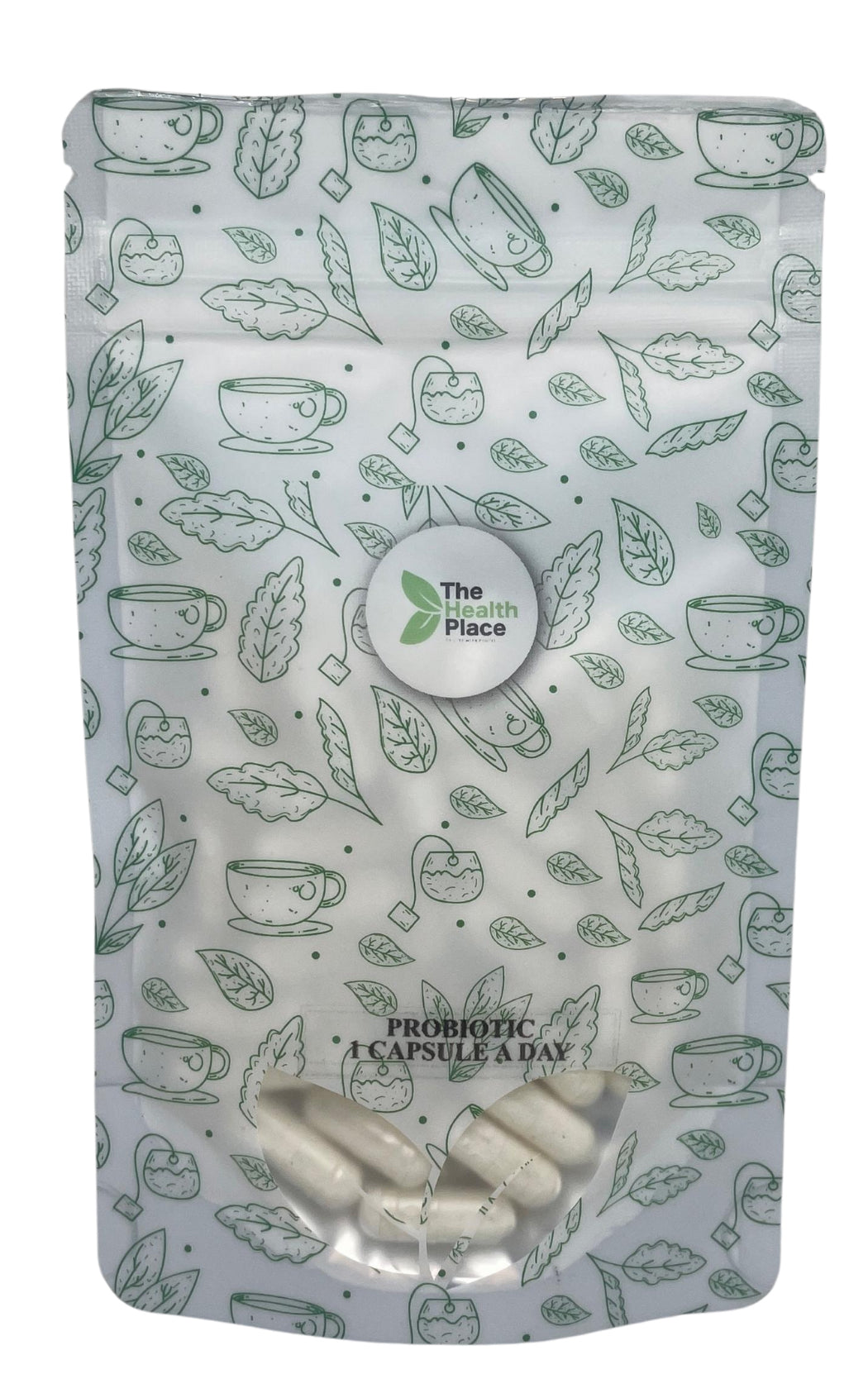
Probiotic Probiotics 20 Billion CFU 7 Strains- 50 Capsules 650mg Each
Strength: 20 Billion CFU per serving
Formula: 7 Listed Probiotic Cultures
Form: Capsules Only
Origin: USA
Digestive Health I Gut Microbiome Support
THP Probiotics 20 Billion CFU is a multi-culture probiotic supplement formulated for adults seeking to incorporate beneficial microorganisms into their daily digestive wellness routine.
The human digestive tract contains trillions of microorganisms, collectively known as the gut microbiota. These microorganisms participate in digestion, microbial metabolism, interactions with the intestinal lining and communication with the immune system.
Probiotics are live microorganisms that, when administered in adequate amounts, can provide health benefits. However, their effects depend on the specific strains, quantities and health circumstances involved.
THP’s formulation contains seven listed probiotic cultures from the Lactobacillus and Bifidobacterium groups, providing a declared total of 20 Billion CFU per serving.
It is intended as a supplement to a balanced diet, not a substitute for medical treatment or a guarantee of relief from digestive symptoms.
KEY BENEFITS
Supports Gut Microbiome Wellness
Provides beneficial microorganisms that may interact with the existing intestinal microbial community.
Supports Digestive Health
Selected probiotic strains have been investigated for their effects on gastrointestinal function, digestive comfort and bowel habits.
Supports Healthy Intestinal Flora
Probiotics can temporarily influence the composition or activity of microorganisms within the digestive tract.
Supports Bowel Regularity
Certain Bifidobacterium strains have demonstrated improvements in bowel movement frequency or stool consistency in clinical studies. Results cannot automatically be generalised to every formulation.
Supports Digestive Recovery Routines
Specific probiotic strains may be useful in selected circumstances involving antibiotic-associated digestive disturbances. This particular blend has not been established as a treatment or preventive therapy.
Supports Gut–Immune Interactions
Intestinal microorganisms interact with the immune system. Some probiotic strains have demonstrated immune-related effects, although this does not mean every probiotic prevents infections.
Supports Everyday Digestive Wellness
Offers a convenient capsule format for adults who wish to include probiotic supplementation in their wellness routine.
SELECTED PROBIOTIC CULTURES
Lactobacillus acidophilus
Lactobacillus acidophilus is a lactic-acid-producing bacterial species commonly associated with the human gastrointestinal and vaginal microbiota.
Research interests include:
- Lactose digestion
- Intestinal microbial balance
- Digestive function
- Vaginal microbial health
Certain studied strains may help with specific digestive or vaginal-health outcomes.
Bifidobacterium animalis
Bifidobacterium animalis belongs to a group of bacteria commonly studied in relation to digestive health and intestinal microbial activity.
Research interests include:
- Gut microbiota interactions
- Intestinal transit
- Digestive comfort
- Immune-related signalling.
Bifidobacterium lactis
Bifidobacterium lactis is commonly used as a name for Bifidobacterium animalis subsp. lactis.
Certain strains have been investigated for bowel movement frequency, stool consistency and gastrointestinal comfort.
Research interests include:
- Bowel regularity
- Digestive comfort
- Intestinal microbial function
- Selected immune-related outcomes
Lactobacillus rhamnosus
Now also classified as Lacticaseibacillus rhamnosus, this species includes strains studied for digestive and intestinal health.
Research interests include:
- Antibiotic-associated diarrhoea
- Selected gastrointestinal infections
- Intestinal barrier interactions
- Certain immune-related outcomes
Lactobacillus reuteri
Now commonly classified as Limosilactobacillus reuteri, this species has been investigated in several areas of human health.
Research interests include:
- Gastrointestinal function
- Selected infant digestive conditions
- Oral microbial health
- Intestinal immune interactions
Lactobacillus fermentans
Now commonly classified as Limosilactobacillus fermentum, this species has been studied for its interactions with the intestinal microbiota and immune system.
Research interests include:
- Microbial interactions
- Immune-related signalling
- Gastrointestinal health
- Selected women’s health applications
Bifidobacterium brevis
Bifidobacterium breve is a bacterial species associated with the human intestinal microbiota, including during early life.
Research interests include:
- Intestinal microbiota development
- Digestive function
- Microbial metabolism
- Immune-system interactions.
WHY CHOOSE THP PROBIOTICS?
- 20 Billion CFU per serving
- Seven listed probiotic cultures
- Includes Lactobacillus and Bifidobacterium groups
- Convenient capsule format
- Imported from the USA
- Suitable for consideration as part of an adult digestive wellness routine
FREQUENTLY ASKED QUESTIONS
What are probiotics?
Probiotics are live microorganisms that may provide health benefits when consumed in adequate amounts.
They are commonly found in certain fermented foods and dietary supplements.
Their effects depend on the particular strains, quantities and health outcomes being investigated.
What does 20 Billion CFU mean?
CFU stands for colony-forming units.
It is a measurement used to estimate the number of viable microorganisms capable of forming colonies under specified laboratory conditions.
THP Probiotics declares 20 Billion CFU per serving.
Does a higher CFU count mean a better probiotic?
Not necessarily.
A higher CFU count does not automatically translate into greater effectiveness.
The identity of the strains, their clinically studied amounts, formulation stability and suitability for the intended use are equally important.
Why does THP use multiple probiotic cultures?
Different microorganisms may have different biological characteristics and interactions within the digestive tract.
A multi-culture formulation provides a combination of microorganisms rather than relying on one alone.
What does each probiotic strain do?
Different probiotic strains may influence digestion, intestinal microbial activity, bowel habits or immune-related processes.
Some strains of Bifidobacterium animalis subsp. lactis have been studied for bowel regularity.
Certain Lactobacillus rhamnosus strains have been investigated for antibiotic-associated diarrhoea.
Selected Lactobacillus acidophilus strains have been studied for lactose digestion and vaginal microbial health.
Other strains within the listed species have been investigated for intestinal function and microbiome interactions.
Can probiotics improve gut health?
Some probiotic strains can support particular aspects of gastrointestinal health.
They may influence microbial activity, intestinal transit or interactions with the intestinal lining.
Can probiotics help with bloating?
Possibly, depending on the cause of the bloating and the strains used.
Some studies have reported improvements in selected digestive symptoms, while others have found little or no benefit.
Probiotics can also temporarily increase gas or bloating, particularly when first introduced.
Persistent or severe bloating should be investigated rather than repeatedly treated with supplements.
Can probiotics help with constipation?
Certain probiotic strains have shown modest improvements in bowel movement frequency and intestinal transit in some studies.
Adequate fluid intake, suitable dietary fibre, physical activity and evaluation of persistent constipation remain important.
Should I take probiotics after antibiotics?
Yes, consider probiotics after antibiotic treatment.
Certain clinically studied strains have evidence for reducing the risk of antibiotic-associated diarrhoea in selected populations.
Can probiotics restore gut bacteria after antibiotics?
Antibiotics can alter the intestinal microbiota, and the microbiome often changes again after treatment.
Probiotic supplementation may temporarily introduce selected microorganisms. Some research suggests that probiotics can influence microbiome recovery differently across individuals.
A varied diet and adequate recovery time are also relevant.
Can probiotics help with irritable bowel syndrome (IBS)?
Some studies have investigated probiotics for IBS symptoms, including bloating, abdominal discomfort and altered bowel habits.
People with persistent IBS symptoms should seek appropriate evaluation and individualised dietary or medical management.
Can probiotics treat H. pylori infection?
No. Probiotics are not a replacement for prescribed Helicobacter pylori eradication treatment.
Certain studied probiotic formulations have been investigated as adjuncts to antibiotic-based treatment, particularly for gastrointestinal side effects, but results vary.
THP Probiotics is not be promoted as a treatment for H. pylori.
Can probiotics help after H. pylori treatment?
Yes, Some people experience changes in digestion following antibiotic treatment.
Can probiotics help with lactose intolerance?
Some specific probiotic cultures may assist lactose digestion under particular conditions.
However, probiotic capsules do not reliably replace lactase enzyme supplementation or appropriate lactose restriction.
People with lactose intolerance should continue to manage their dietary triggers.
Can probiotics help with vaginal health?
Certain Lactobacillus strains have been studied for their interactions with the vaginal microbiota.
Can probiotics support immunity?
The intestinal microbiota interacts closely with the immune system.
Some probiotic strains have shown immune-related effects in clinical research, including selected respiratory or gastrointestinal outcomes.
Can probiotics improve mood or the gut–brain connection?
The gut and brain communicate through neural, hormonal and immune-related pathways.
Researchers are investigating whether selected microorganisms can influence mood, stress and cognitive outcomes.
However, evidence is preliminary and highly strain-dependent.
Are probiotics suitable for children?
Yes, but for children aged one year and above with professional guidance.
Can pregnant or breastfeeding women take probiotics?
Some probiotic strains have been studied during pregnancy and breastfeeding, but safety findings cannot automatically be applied to every formulation.
Pregnant or breastfeeding customers should consult their healthcare professional before using this product.
Who should avoid probiotics or seek medical advice first?
People with severely weakened immune systems, critical illness, certain serious gastrointestinal conditions or significant medical complexity should seek professional guidance.
Live microbial supplements can pose additional risks in vulnerable individuals.
Can probiotics cause gas or bloating?
Yes.
Some individuals experience temporary gas, bloating or changes in bowel movements after beginning probiotic supplementation.
These effects are often mild, but tolerance varies.
Stop using the product and seek medical advice if symptoms are severe, persistent or concerning.
How long does it take for probiotics to work?
There is no universal timeframe.
Some studies assess outcomes after several weeks, while others use different treatment durations.
Should probiotics be taken daily?
Many probiotic supplements are designed for regular use, but the appropriate frequency depends on the formulation and intended purpose.
Follow THP’s verified product instructions.
When is the best time to take probiotics?
There is no universally established best time for every probiotic formulation.
Some products are taken with food, while others have different directions.
Follow the product-specific instructions supplied by THP.
Can probiotics be taken with antibiotics?
Our probiotic formulations is recommended for use after antibiotic treatment under professional guidance.
Can probiotics be taken with prebiotics?
Yes, depending on individual tolerance.
Prebiotics are substances used selectively by beneficial microorganisms.
Certain dietary fibres can act as prebiotics.
However, combining prebiotics and probiotics may increase gas or bloating in sensitive individuals.
What is the difference between probiotics and prebiotics?
Probiotics are live microorganisms that may confer health benefits when used in adequate amounts.
Prebiotics are substances, commonly certain fibres, that are selectively utilised by host microorganisms and confer a health benefit.
They are related but are not the same thing.
What foods naturally contain probiotics?
Some fermented foods contain live microorganisms.
Examples include yoghurt with live cultures, kefir, certain fermented vegetables and some traditionally fermented foods.
Nigerian fermented foods such as ogi, nunu, dawadawa and ugba may contain microorganisms, but the types and viable quantities vary with preparation and processing.
Not every fermented food meets the scientific definition of a probiotic food.
Why might probiotic powder inside a capsule become clumped?
Probiotic powders may become compacted or clumped because of moisture exposure, ingredient properties, packaging conditions or storage.
Customers should follow the stated storage instructions and contact THP if the capsules show unexpected changes.
Does clumping mean the probiotics are spoiled?
Not necessarily, but clumping should not automatically be considered harmless.
If capsules are unusually wet, discoloured, leaking, damaged or have an unexpected odour, discontinue use and contact THP.
How should THP Probiotics be stored?
Protect the capsules from heat, direct sunlight and humidity.
Keep the packaging tightly closed.
What are the best probiotics in Nigeria?
There is no single probiotic that is best for everyone.
When comparing products, consider the exact strains, CFU count, clinical evidence for the intended use, storage requirements and product quality.
THP Probiotics provides a declared 20 Billion CFU per serving from seven listed probiotic cultures.
How much are THP Probiotics in Nigeria?
The current price is displayed on the THP product page.
Prices may change, so customers should refer to the live listing.
Can I buy probiotics online in Nigeria?
Yes. THP Probiotics can be ordered online from The Health Place Africa for delivery within Nigeria.
SAFETY AND PRECAUTIONS
- Follow the verified serving instructions on the product label.
- Not intended to diagnose, treat, cure or prevent disease.
- People with compromised immune systems or serious illnesses should seek medical guidance before use.
- Consult a healthcare professional before use during pregnancy or breastfeeding.
- Do not give to infants or young children without appropriate medical advice.
- Possible side effects include gas, bloating and digestive discomfort.
- Seek medical assessment for persistent or severe gastrointestinal symptoms.
- Do not replace prescribed antibiotics, antifungals or other medications with probiotics.
- Discontinue use and seek medical advice if significant adverse reactions occur.
STORAGE
Store according to the supplier’s validated temperature and humidity requirements.
Protect from direct sunlight, excessive heat and moisture.
Keep packaging securely sealed after each use.
Do not assume that clumping confirms product purity or that live bacterial potency remains unchanged.
PRODUCT QUALITY
- Origin: USA
- Form: Capsules
- Declared potency: 20 Billion CFU per serving
- Seven listed probiotic cultures
Additional claims regarding certification, absence of fillers, manufacturing standards, halal or kosher status and non-GMO verification should be published only after confirmation from current supplier documentation.
IMPORTANT NOTICE
Statements regarding dietary supplements have not been evaluated by the US Food and Drug Administration. This product is not intended to diagnose, treat, cure or prevent any disease.

Choose options