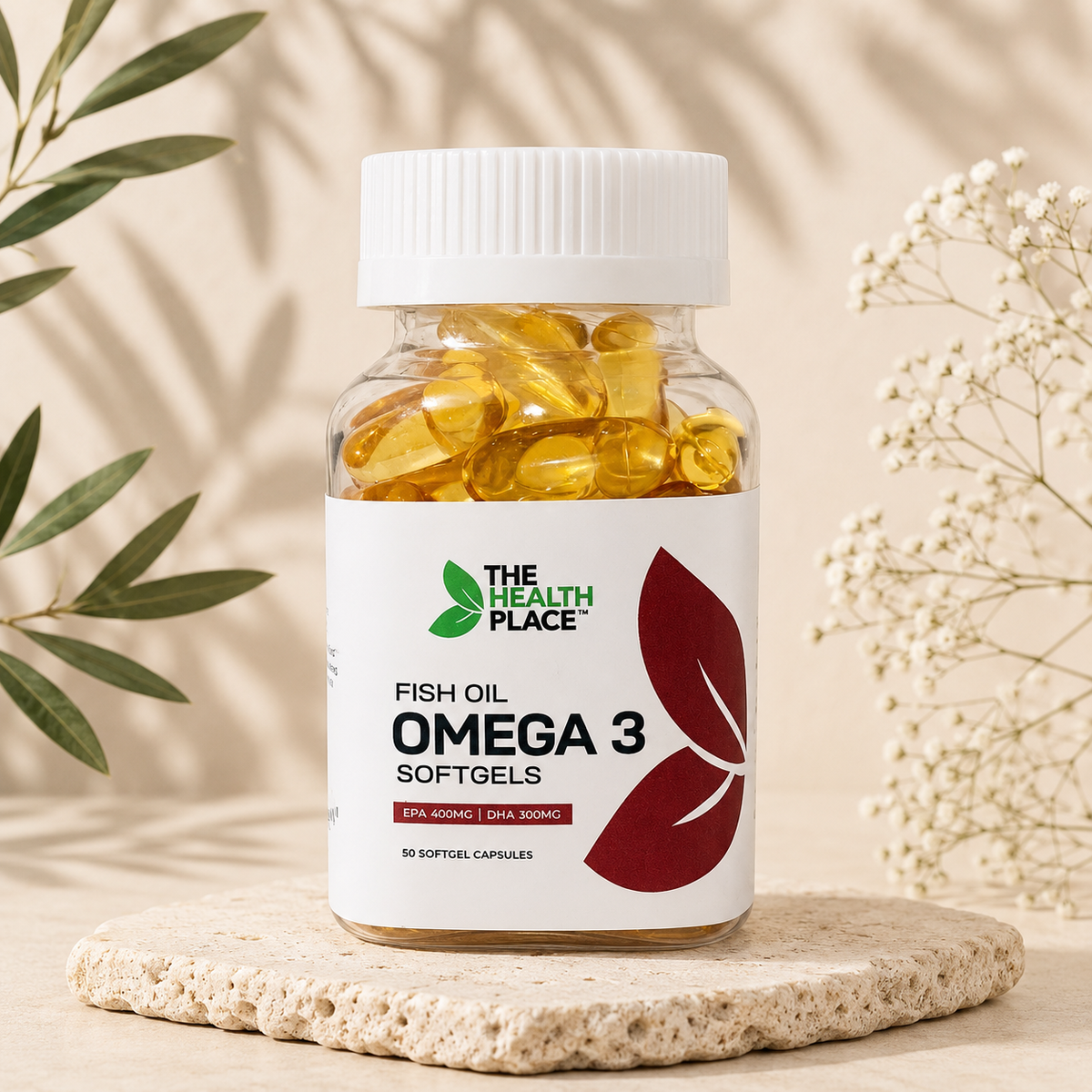
Omega-3 Fish Oil 1,000mg – EPA & DHA – 50 Softgels
FISH OIL OMEGA 3 SOFTGELS
50 Softgels, 1000 mg Per Softgel
THP Omega-3 Fish Oil provides 1,000mg of fish oil per softgel, including the long-chain omega-3 fatty acids EPA and DHA.
Our 18/12 formulation provides approximately 180mg EPA + 120mg DHA per softgel, for a total of 300mg EPA + DHA.
EPA and DHA are important omega-3 fatty acids involved in perimenopausal,cardiovascular, brain and cellular function. Each pack contains 50 softgels.
FREQUENTLY ASKED QUESTIONS
What is Omega-3 Fish Oil?
Omega-3 Fish Oil is a dietary source of the long-chain omega-3 fatty acids EPA (eicosapentaenoic acid) and DHA (docosahexaenoic acid).
EPA and DHA occur naturally in oily fish and have been extensively studied for their roles in cardiovascular, brain and general health.
What is the difference between Fish Oil and Omega-3?
They are not exactly the same thing.Fish oil refers to the total oil obtained from fish. Omega-3 refers to specific fatty acids within that oil, particularly EPA and DHA. This means 1,000mg of Fish Oil does not mean 1,000mg of EPA + DHA.
How much EPA and DHA is in each THP Omega-3 softgel?
Each softgel provides:
Fish Oil — 1,000mg
EPA — approximately 180mg
DHA — approximately 120mg
Total EPA + DHA — approximately 300mg
The formulation is an 18/12 EPA/DHA fish oil.
What are EPA and DHA?
EPA and DHA are two of the principal long-chain omega-3 fatty acids. DHA is particularly concentrated in the brain and retina and is an important structural component of cell membranes.
EPA and DHA also participate in several physiological processes associated with cardiovascular and metabolic health.
What are the main benefits of Omega-3?
Omega-3 EPA and DHA have been extensively studied for:
- Cardiovascular health
- Perimenopausal Support
- Triglyceride metabolism
- Brain and nervous-system health
- Normal cell-membrane function
- General nutritional wellness
Is Omega-3 good for heart health?
Yes. EPA and DHA have been extensively studied in relation to cardiovascular health. Omega-3 intake is particularly well established for its effect on blood triglycerides, although a standard fish-oil supplement should not be considered a treatment for cardiovascular disease.
Does Omega-3 lower triglycerides?
EPA and DHA can reduce blood triglyceride levels. However, the amounts used medically to treat significantly elevated triglycerides are generally substantially higher and may involve prescription-strength omega-3 products.
If you have been diagnosed with high triglycerides, do not replace prescribed treatment with a standard fish-oil supplement.
Is Omega-3 good for cholesterol?
Omega-3 is better known for its effects on triglycerides than for lowering cholesterol. Its effects on LDL and HDL cholesterol can vary depending on the formulation, amount used and individual.
Is Omega-3 good for the brain?
DHA is an important structural component of brain-cell membranes and is highly concentrated in brain tissue.Adequate omega-3 intake therefore has an important nutritional role in maintaining normal brain function.
Is Omega-3 good for the eyes?
DHA is highly concentrated in the retina and contributes to normal retinal structure and function.
Why is Omega-3 recommended during perimenopause and menopause?
During perimenopause and menopause, declining estrogen is accompanied by changes in metabolism and cardiovascular risk. Blood lipids can change, body-fat distribution may shift, and triglycerides and other cardiometabolic markers become increasingly important to monitor.
Omega-3 fatty acids EPA and DHA are particularly relevant during this stage because of their established roles in cardiovascular health and triglyceride metabolism. Research in postmenopausal women has found that Omega-3 supplementation can significantly reduce triglyceride levels.
Omega-3 also provides DHA, an important structural fatty acid in the brain and nervous system.
For these reasons, Omega-3 can be a useful foundational nutritional supplement during perimenopause and menopause, particularly for women who do not regularly eat oily fish.
Can Omega-3 help with hot flashes and night sweats?
Omega-3 has been studied for menopausal symptoms including hot flashes and night sweats, but the evidence is mixed.Some studies have reported improvements in night sweats or other vasomotor symptoms, while larger controlled trials have found no meaningful improvement in hot flashes compared with placebo. We therefore recommend Omega-3 during perimenopause primarily for its nutritional, cardiovascular, metabolic and brain-health roles, rather than presenting it as a treatment for hot flashes.
Is Omega-3 useful even if I am taking other perimenopause supplements?
Yes. Omega-3 serves a different purpose from supplements commonly used for specific menopausal symptoms.
It can form part of a broader perimenopause or menopause routine because EPA and DHA provide nutritional support for cardiovascular health, triglyceride metabolism and brain health.
If you take prescription medication or are unsure how to combine your THP supplements, WhatsApp us , Monday to Friday, 11am–4pm.
Can Omega-3 support inflammation balance?
EPA and DHA participate in pathways involved in the body’s inflammatory response.
Can Omega-3 support joint health?
Omega-3 fatty acids have been studied in relation to inflammatory joint conditions and may form part of an overall nutritional approach to joint wellness.
Is Omega-3 useful for women with PCOS?
Omega-3 has been studied in women with PCOS, particularly for metabolic measures including triglycerides and some markers related to insulin metabolism.
Can Omega-3 support fertility?
Omega-3 fatty acids are important components of cell membranes and have been investigated in both male and female reproductive health. Omega-3 is best considered part of overall nutritional support when trying to conceive rather than a fertility treatment.
Should I take Omega-3 if I don’t eat much fish?
Yes, this is one of the most practical reasons to consider an Omega-3 supplement. People who rarely eat oily fish may have a lower dietary intake of EPA and DHA.
Which foods naturally contain Omega-3 EPA and DHA?
Oily fish are among the richest dietary sources, including:
- Sardines
- Mackerel
- Salmon
- Herring
- Tuna
How much Omega-3 should I take?
Please follow the directions clearly stated on your THP bottle. The appropriate amount depends on your dietary intake and why you are supplementing.
If you have questions about how to use your THP Omega-3, WhatsApp us Monday to Friday, 11am–4pm.
When is the best time to take Omega-3?
There is no single required time of day. Taking Omega-3 consistently with a meal is generally a practical approach and may also help reduce fishy aftertaste or gastrointestinal discomfort.
Should I take Omega-3 with food?
Yes. Taking your softgel with a meal is generally recommended for convenience and tolerance.
Can I take Omega-3 every day?
Yes. Omega-3 supplements are commonly used daily.
Why should I look at EPA and DHA rather than just “1,000mg Fish Oil”?
Because the 1,000mg refers to the total amount of fish oil, not the amount of EPA and DHA. When comparing Omega-3 supplements, look at the actual EPA and DHA content.
THP’s current 1,000mg formulation provides approximately 180mg EPA + 120mg DHA = 300mg EPA + DHA per softgel.
Can I take Omega-3 with Vitamin D?
Yes. Omega-3 and Vitamin D can generally be included in the same supplement routine.
Can I take Omega-3 with CoQ10?
Yes. Omega-3 and CoQ10 are commonly used together as part of cardiovascular and general nutritional wellness routines.
Can I take Omega-3 with blood thinners?
If you take anticoagulant or antiplatelet medication, discuss Omega-3 supplementation with your healthcare professional, particularly before taking high amounts.
Can I take Omega-3 during pregnancy?
DHA is nutritionally important during pregnancy and plays a role in fetal brain and eye development.
However, if you are pregnant, consider your total Omega-3 intake from food, prenatal supplements and any separate DHA or fish-oil supplements and discuss supplementation with your healthcare provider.
Can I take Omega-3 while breastfeeding?
Omega-3 fatty acids, particularly DHA, remain nutritionally important during breastfeeding.
If you already use a postnatal or DHA supplement, consider your total intake before adding another Omega-3 product.
Can children take Omega-3?
Children require omega-3 fatty acids as part of normal nutrition, but the appropriate supplement and amount depend on age and individual circumstances.
Do not automatically use an adult Omega-3 softgel for a child without appropriate guidance.
What are the common side effects of Omega-3 Fish Oil?
Fish oil is generally well tolerated. Possible effects include:
- Fishy aftertaste or burps
- Heartburn
- Nausea
- Gastrointestinal discomfort
- Loose stools
What should I do if Omega-3 gives me fishy burps?
Try taking your softgel during or immediately after a meal rather than on an empty stomach.
Is more Omega-3 always better?
No. Higher amounts are not automatically more beneficial. High-dose Omega-3 used for specific medical purposes should be taken under appropriate medical supervision.
How long does Omega-3 take to work?
Omega-3 is a nutritional supplement and is not expected to produce an immediate sensation.
How long it takes to influence a particular measurable outcome depends on your existing diet, EPA and DHA intake, amount used and the outcome being assessed.
Where can I buy Omega-3 Fish Oil in Nigeria?
THP Omega-3 Fish Oil 1,000mg can be ordered online from The Health Place Africa for delivery within Nigeria.
For questions about how to use your product, WhatsApp us Monday to Friday, 11am–4pm.
Premium Quality
No fillers, flow agents, or preservatives
• Imported 100% raw from trusted sources ✔
• Carefully Packed in Nigeria ✔
• ISO 22000:2018 Certified ✔
• SGS cGMP (21 CFR Part 111) Certified ✔
• Halal & Kosher Certified ✔
• Non-GMO ✔
All our products are 100% natural, produced under globally recognized certifications, and processed in FDA-registered, GMP-certified facilities.
Statements regarding dietary supplements have not been evaluated by the FDA and are not intended to diagnose, treat, cure, or prevent any disease or health condition.

Choose options