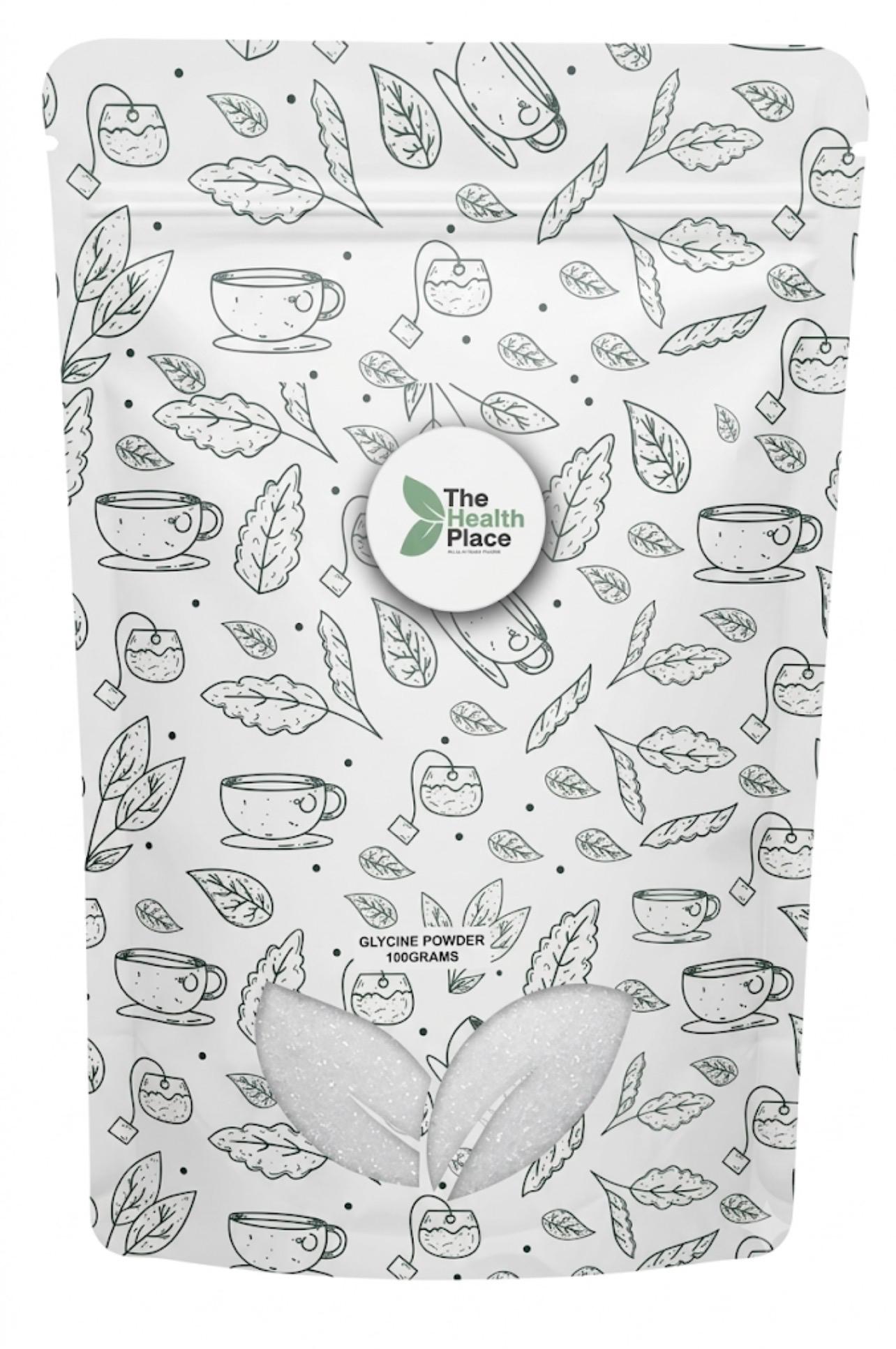
Glycine 100Grams Powder
Scientific Name: Glycine (Aminoacetic Acid)
Origin: USA
Product Overview
THP Glycine is a 100% pure amino acid powder particularly useful as part of a perimenopause and healthy-aging wellness routine, especially for women looking for support with sleep quality, recovery, collagen production, skin, joints and connective tissue.
Glycine is an amino acid naturally produced by the body and obtained through food. It is a major component of collagen, the structural protein found throughout the skin, joints and connective tissue. Glycine also functions within the nervous system and has been studied for its potential role in sleep quality.
For women in perimenopause, we particularly recommend Glycine for relaxation and sleep quality, overnight recovery, collagen production and connective tissue support. It can also be used as part of a broader healthy-aging and exercise-recovery routine.
Glycine has a mild, naturally sweet taste and mixes easily into water and other beverages.
FREQUENTLY ASKED QUESTIONS
What is Glycine?
Glycine is an amino acid naturally present in the human body and in protein-containing foods.The body uses Glycine in numerous biological processes, including protein and collagen synthesis. It is particularly abundant in collagen and also functions as a neurotransmitter within the nervous system.
What are the main benefits of Glycine?
Glycine is commonly used to support:
- Perimenopause and healthy aging
- Relaxation and sleep quality
- Collagen production
- Skin and connective tissue health
- Joint health
- Muscle and exercise recovery
- General amino-acid and nutritional support
Why do you recommend Glycine during perimenopause?
We recommend Glycine as part of a broader perimenopause wellness routine because several areas that become increasingly important during midlife including sleep, recovery, muscle health, skin, joints and connective tissue involve physiological processes in which Glycine participates.
Glycine is particularly important for collagen because approximately one-third of the amino acids in collagen are Glycine.
It has also been studied for sleep quality, making it especially relevant for women whose sleep becomes more disrupted during the menopausal transition.
Glycine is therefore used as nutritional support during perimenopause, rather than as a hormone treatment.
Does Glycine balance hormones or increase estrogen?
No. Glycine is not estrogen and should not be considered a hormone-balancing treatment.
Its relevance during perimenopause is primarily its role in sleep, collagen production, connective tissue, recovery and healthy aging.
Can Glycine help with sleep?
Glycine has been studied for its potential effects on sleep. Small human studies suggest that Glycine taken before bedtime may support subjective sleep quality and may help reduce next-day tiredness following restricted or poor-quality sleep.
It is not a sleeping medication or sedative, and individual responses can vary.
Does Glycine make you sleepy?
Glycine is not a conventional sedative.It is commonly used as part of an evening routine because of its potential role in sleep quality, but it should not be expected to produce the immediate sedating effect associated with sleeping medication.
When should I take Glycine for sleep?
If you are using Glycine for sleep support, take it as part of your nighttime routine before bed.Glycine has a naturally mild, sweet taste, so it is very easy to use in the evening. You can simply mix it into water and drink it, or stir it into your favorite caffeine-free herbal tea.
For example, you can add Glycine to Chamomile, Valerian, Lemon Balm, Passionflower or another nighttime herbal tea. This makes it an easy addition to an existing bedtime routine rather than another capsule or supplement to remember.
How do I take Glycine Powder?
Glycine Powder dissolves easily and has a naturally mild, sweet taste.Simply mix it into water or stir it into a herbal tea. If you are taking Glycine primarily for sleep and relaxation support, we recommend making it part of your nighttime ritual for example, adding it to your evening cup of caffeine-free herbal tea before bed.
There is no need to add sugar or sweetener unless you want to, as Glycine itself is naturally sweet.
Can I add Glycine to herbal tea?
Yes. This is actually one of the easiest ways to use Glycine, particularly if you are taking it for sleep support.Add your serving of Glycine Powder to a cup of caffeine-free herbal tea and stir until dissolved. It pairs particularly well with nighttime herbs such as Chamomile, Valerian, Lemon Balm and Passionflower.
Is Glycine good for collagen production?
Yes. Glycine is one of the principal amino acids used to build collagen and is particularly abundant within the collagen protein.This makes adequate Glycine nutritionally relevant to skin, joints and connective tissue.
However, collagen production requires more than Glycine alone. The body also requires other amino acids and nutrients, including Vitamin C, to synthesize collagen normally.
Is Glycine the same as Collagen?
No.Glycine is an individual amino acid. Collagen is a protein made from multiple amino acids.Glycine is particularly abundant in collagen, alongside amino acids including proline and hydroxyproline.
Which is better: Glycine or Collagen?
It depends on what you want from the supplement.Choose Glycine if you particularly want an amino acid that can support sleep and relaxation alongside collagen, connective tissue and recovery.
Choose Hydrolyzed Collagen if your primary objective is supplementing directly with collagen peptides containing the broader amino-acid profile naturally found in collagen.They can also be used together.
Can I take Glycine with Collagen?
Yes.Collagen naturally contains Glycine, so taking the two together means your overall Glycine intake will include both the Glycine contained naturally within your collagen and your standalone Glycine Powder.
Is Glycine good for the skin?
Glycine is a major component of collagen, making it nutritionally relevant to skin structure and connective tissue. It should not, however, be considered a treatment for wrinkles, pigmentation or skin disease.
Can Glycine help with hair and nails?
Glycine participates in protein and collagen synthesis and can therefore contribute to the nutritional foundation required for healthy tissues.However, hair loss and brittle nails can have many causes, including nutritional deficiencies, thyroid conditions and hormonal changes. Glycine should not be considered a treatment for unexplained hair loss.
Can Glycine support joint health?
Yes. Glycine is a major component of collagen, while collagen is an important structural protein in cartilage and other connective tissues. This makes Glycine nutritionally relevant to joint and connective-tissue health, although it is not a treatment for arthritis.
Can Glycine support muscle recovery?
Glycine participates in protein metabolism and is also required by the body for the synthesis of several important compounds, including creatine.It can therefore form part of a broader recovery programme alongside adequate dietary protein, hydration, sleep and appropriate exercise.
Is Glycine the same as Magnesium Glycinate?
No. Glycine Powder provides the amino acid Glycine directly. Magnesium Glycinate/Bisglycinate is a form of magnesium in which magnesium is bound to Glycine.
The primary reason for taking Magnesium Bisglycinate is to supplement magnesium. The primary reason for taking standalone Glycine Powder is to supplement Glycine.
Which is better for sleep: Glycine or Magnesium Glycinate?
They provide different nutrients and do not need to be treated as competing products. Choose Magnesium Bisglycinate if you specifically need magnesium support alongside relaxation, muscle and nervous-system support.
Choose Glycine if you specifically want Glycine for sleep quality alongside collagen, connective tissue and recovery support.Some people may appropriately use both within the same routine.
Can I take Glycine with Magnesium Bisglycinate?
Yes, they can generally be used together.Remember that Magnesium Bisglycinate already contains Glycine as part of the compound, although its principal purpose as a supplement is to provide magnesium.
Can I take Glycine with Omega-3?
Yes.They serve different nutritional purposes and can generally be incorporated into the same wellness routine.
For women in perimenopause, the combination can be particularly complementary: Glycine for sleep, collagen, connective tissue and recovery support, and Omega-3 EPA/DHA for cardiovascular, triglyceride, brain and general nutritional support.
Can I take Glycine with Vitamin D and Magnesium?
Generally, yes. Glycine, Vitamin D and Magnesium perform different physiological functions and can be incorporated into the same wellness routine where appropriate.
Can I take Glycine with Melatonin?
Glycine and Melatonin work differently and can generally be used within the same sleep routine.
However, combining more supplements does not automatically produce better sleep. Follow the directions on each THP product and consider the reason you are using each supplement.
Does Glycine contain sugar?
No added sugar is used in THP Glycine Powder.The product contains 100% Pure Glycine Powder.Glycine naturally has a mildly sweet taste, but Glycine itself is an amino acid, not table sugar.
Why does Glycine taste sweet?
A mildly sweet taste is a natural characteristic of Glycine itself. It does not mean that sugar or sweetener has been added to the product.
Can Glycine be taken every day?
Glycine occurs naturally in the human body and diet, and supplemental Glycine is commonly used regularly.
Follow the directions on your THP pouch rather than assuming that a larger amount will provide greater benefits.
Can I take Glycine during the day?
Yes. Glycine is not exclusively a nighttime supplement.If your primary reason for using it is sleep support, however, incorporating it into your evening routine may be more practical.
Can Glycine be taken on an empty stomach?
Glycine can generally be taken with or without food.If taking it on an empty stomach causes digestive discomfort, take it with food instead.
Does Glycine help with blood sugar or insulin resistance?
Glycine is involved in several metabolic processes and has been studied in relation to glucose metabolism and metabolic health.However, Glycine should not be considered a treatment for diabetes or insulin resistance.
THP primarily recommends this product for perimenopause wellness, sleep, collagen production, connective tissue, recovery and healthy aging.
What are the possible side effects of Glycine?
Glycine is generally well tolerated, but supplemental amounts may cause gastrointestinal symptoms in some people, including:
- Nausea
- Stomach discomfort
- Loose stools
Reduce or discontinue use and seek appropriate advice if you experience persistent adverse effects.
Can I take Glycine during pregnancy or breastfeeding?
If you are pregnant or breastfeeding, consult your healthcare provider before using supplemental Glycine.
Can I take Glycine with medication?
If you take prescription medication or are managing a medical condition, discuss regular Glycine supplementation with your healthcare provider.
How should I store Glycine Powder?
Store in a cool, dry place away from direct sunlight. Keep the pouch properly sealed and out of reach of children.
Where can I buy Glycine Powder in Nigeria?
THP Pure Glycine Powder 100g can be ordered online from The Health Place Africa for delivery within Nigeria.
For help with how to use your product, WhatsApp us Monday to Friday, 11am–4pm.
Premium Quality
• Imported 100% raw from trusted sources ✔
• Carefully Packed in Nigeria ✔
• ISO 22000:2018 Certified ✔
• SGS cGMP (21 CFR Part 111) Certified ✔
• Halal & Kosher Certified ✔
• Non-GMO ✔
All our products are 100% natural, produced under globally recognized certifications, and processed in FDA-registered, GMP-certified facilities.
Statements regarding dietary supplements have not been evaluated by the FDA and are not intended to diagnose, treat, cure, or prevent any disease or health condition.

Choose options